Nigerian Government commences issuance of biometric visa

The Nigeria Government has started issuing biometric visa, being the first in Africa.
The development was announced by the Ministry of Interior, Lt.-Gen. Abudurahman Dambazau, at the 2017 End-of-Year Dinner and Award Night of the Nigeria Immigration Service in Abuja on Monday.

He said, “Nigeria is the only country in Africa that is issuing biometric visa. It started this year, but we have already launched it.

“I know the biometric visa is going to block many people that we don’t want to come to Nigeria.”

Chairperson of the event planning committee, Edith Onyemenam, said it was one of the first federal agencies to implement the Presidential Executive Orders issued earlier in the year.

Onyemenam, who is a Comptroller of Immigration, pointed out that the introduction of online pre-approval for Visa on Arrival contributed greatly to the country’s improvement in the World Bank’s ease of doing business ranking from 169th to 145th position.

Also speaking, the Comptroller-General of Immigration, Mohammed Babandede, said, “We achieved a lot because I have a good team.

“We have trained officers in every training institution. I think we will do more.”

Dickson says $1b ECA fund in good faith, replies Fayose


Gov. Seriake Dickson of Bayelsa: explains the $1b ECA fund for security

Gov. Seriake Dickson of Bayelsa state replied Governor Ayodele Fayose and others making a ruckus over the $billion approved to fight insecurity. He said the decision by the governors was taken in good faith.

Dickson who belongs to the same Peoples Democratic Party like Governor Ayodele Fayose, who has challenged the move in court,  explained why  the Governors’ Forum’s decided  to grant Federal Government permission to utilize one billion dollars from the Excess Crude Account for security.

The decision was announced at the end of the  last National Economic Council (NEC) meeting  in Abuja.

Fayose is a member of the forum.

The Bayelsa governor noted that the decision was not a political one but meant to strengthen the country’s security apparatus.

“It was a decision taken in good fate to support our security services, to strengthen our national security and enhance operations in the interest of everybody else.

“This is not a political issue and I thought that I should say that, but the details of what we would do and say and the clarifications will come at the end of the meeting of the governors.’’

Dickson said that the governors would meet later in the day to fine tune how to move the matter further, noting that there was a lot of unnecessary controversy on the approval in the media.

“After the meeting this afternoon, our chairman and some of us may have to talk to the media, may have the need to interact with the president and the vice president on it.

“These are issues of national security and I think that we leaders must be circumspect in terms of creating controversies on issues of national security.

“Our duty is to collaborate among ourselves, collaborate with the Federal Government on two critical issues of national security and issues of the economy, and that is what the NEC does.’’

Dickson stated that he came to consult the vice president, adding that the governors were also consulting to deal with the issues.

He said he would not prejudge the outcome of the meeting but was sure it would throw some further light in what was out there in the public domain.

On the recent assassinations and rise in crime in Bayelsa, the governor stated that increase in crime was a national phenomenon during the period of festivities
`

‘`It is a national phenomenon, especially at this time of the year; Bayelsa has been known for stability and peace in the last six years.
`

`That’s one area we have expended a lot of energy and resources and so we are concerned if there is any incident of criminal conduct not to talk of two, three, four or five.

“It is still within control but we are bothered about it.
`

`And we are working together and supporting the security forces, mobilising the citizens of the state and activating our structures and systems to ensure that we regain control of the security situation.

“So I assure all of you, I assure the country that Bayelsa is safe and stable.

“Security forces and community leaders are working together and there is a government that understands the role and the place of security which I lead.

“So, no cause for alarm, things are okay.’’
The governor acknowledged that he came to have discussion with the Vice President on issues of national interest and concern but which he was not in a position to divulge the details.(NAN)

Alleged illicit asset acquisition: Court clears Aiteo boss Peters - The Nation Nigeria


The Federal Capital Territory High Court has cleared Aiteo Group  Executive Vice Chairman Benedict Peters of illicit acquisition of assets allegations.

The court held that the allegations were baseless and  that the assets were not liable to be forfeited to the Federal Government.

Justice Valentine Ashi, in a December 5 judgment, held: “From the material before me, the defendant (Peters) has a reasonable and verifiable means of livelihood and cannot be said to be living above means.

“In the absence of any specific offence and proof of commission of crime, the defendant legitimately and lawfully acquired the assets and properties, the subject matter of this suit.”

The listed assets include 58 Harley House, Marylebone Road, London worth£2,800,000; apartment 4, 5, Arlington Street, London worth £11,800,000; Flat 5, 83-86, Prince Albert Road, London worth£3,750,000, and other assets of Aiteo Energy Resources worth over $4.023billion.

Others are monies in account numbered 105277 in FBN Bank (UK) in the name of Mr. B and Mrs. N. Peters, monies in account (No 107127) in FBN Bank (UK) of Walworth Properties Ltd, and £36,674.7 held on behalf of defendant in the client account of Clyde and Co. LLP , London.

The rest are £40,620 held in a correspondent bank account at Ghana International Bank, London, and shares in Walworth Properties Limited, Rosewood Investments and Colinwood Limited.

The plaintiff, Moses Uyah, in a suit numbered FCT/HC/CV/ 0093/17, alleged that Peters acquired the assets fraudulently because he was unable to account for income or earnings from which such purchases could have been lawfully funded.

He asked the court not only to find that Peters’ acquired the properties illegally, but to hold that he lived above his means and that funds used acquire the assets were the proceeds of corrupt and illegitimate dealings.

The plaintiff asked the court to order the forfeiture of Peters’ assets to the Federal Government.

But, Peters produced evidence of his source of funds, including his business spanning over 25 years in the oil and gas industry.

He also provided evidence of funding from financial institutions which he invested over several years in his company, resulting in Aiteo Group’s considerable success.

Justice Ashi found that based on the evidence, Peters established that he had a credible and verifiable means of livelihood.

The court also held that he legitimately funded the acquisition of the properties identified in the proceedings and therefore could not be accused of living above his means.

Dismissing the case, Justice Ashi ruled that the “said assets and properties having been legitimately acquired by the defendant cannot be forfeited to the Government under any circumstances.”

The judge made an order “restraining any person, security agency or authority from disturbing the defendant’s quiet enjoyment of his assets and properties having been found to be legitimately acquired.”

The judgment follows a similar ruling quashing money laundering charges and bribery of election officials against Peters.

In the suit numbered FCT/HC/CV/0091/17, the plaintiff, Chief Akimoju Jero, accused Peters and a firm, Northern Belt Oil & gas Company Limited, of offering $115million to electoral officers to alter the results of the 2015 presidential election.

The plaintiff also urged the court to hold that Peters was liable to prosecution for allegedly making political donations.

Dismissing the allegations, the court held: “The purported allegation of bribery of electoral officials, contrary to the provisions of Section 124 of the Electoral Act, though not proved by any iota of evidence against the defendants, is also duly discredited by the material evidence before the court such that the allegation cannot stand.

“The plaintiff’s case is lacking in merit and substance. It shall be and it is hereby accordingly dismissed.”

Terry reveals why Chelsea sold De Bryne, Lukaku and Salah - FCNaija


Former Chelsea captain John Terry has revealed the reason why Kevin de Bruyne, Romelu Lukaku and Mohamed Salah were sold by Chelsea at one point during their Stamford Bridge career, according to report.

The trio was sold to West London clubs and subsequently considered among the best players in the League.

De Bruyne has been in scintillating form for the Etihad outfit Manchester City helping Pep Guardiola to a record of 15 straight consecutive wins in the Premier League, He is also considered by many to be the best player in the league at the moment.

Lukaku was in great form for Everton last season which made Manchester United slash a lump sum of £75million to secure his service and has scored 10 Premier League goals this season.

He sold by Chelsea to Everton in 2014.

After making his deal permanent deal from Fiorentina, having been sold by Chelsea, Salah returned to the Premier League but with Liverpool.

Salah has been a shining star since the start for Premier League he has scored 14 goals so far and still counting, The Egyptian recently won the BBC African footballer of the year.

Despite their recent exploits in their various clubs, Terry believes there should be no regrets over their departure from Chelsea. ‘Not really, because at the time they didn’t make our team stronger,’ he told Sky

Sports when asked if they should regret selling them. ‘Let’s not forget we were one of the best teams probably the Premier League has ever seen, in the early days when they arrived. ‘So they were coming into

one of the best sides which was even more difficult. ‘When they come in can they make a big enough impact to sustain and keep their place? No, it’s very difficult to do.’

Terry conceded it remains difficult for young Chelsea players to break into the team, but it’s not impossible. ‘That’s why I think, even at Chelsea, you look at [Andreas] Christensen he’s come in and done great,

keeps his place. David Luiz is now out and fighting for his place. ‘When you’re a younger player like [Ruben] Loftus-Cheek coming in, can you set the world alight in a cup game or whatever game you’ve been given?

The last group game of the Champions League? ‘I don’t think that’s enough for these boys to go “that’s enough game time to show I’m a Chelsea player”. I think unfortunately he then has to go away to a Crystal

Palace. For me, he’s good enough to come back to Chelsea. But sometimes you have to go away. I did it when I was young.

Chelsea has gone from strength to strength even with the sale of these trios in the last four seasons the Blues won two Premier League titles.

220 Boko Haram Terrorists Captured, Says Nigerian Army

Approval of $1 bn anti-terrorism grant in order, NGF replies Fayose

Onyebuchi Ezigbo in Abuja and Michael Olugbode in Maiduguri

In a feat unequalled since the war against terrorism began about eight years ago, the Nigerian Army, at the weekend, said it captured 167 suspected Boko Haram terrorists in various operations in the North-east over the last fortnight. Deputy Director, Army Public Relations, and Theatre Command Spokesperson, Operation Lafiya Dole, Col. Onyema Nwachukwu, disclosed this in a statement in Maiduguri. He said 53 other insurgents had earlier been captured.

The announcement came as President Muhammadu Buhari’s request for $1 billion grant in aid of efforts to combat the Boko Haram terrorism received a boost from the Nigeria Governors’ Forum. NGF also dissociated itself from the position of Ekiti State Governor Ayodele Fayose, who claimed the grant request was a ploy to garner funds for Buhari’s re-election campaign, which never received the governors’ unanimous support.

In a related development, there were divergent views at the weekend over the fate of repentant terrorists, with some canvassing forgiveness for them while others maintained that they should face the full weight of the law.

Nwachukwu said troops fighting Boko Haram in the North-east under the special military operation code-named Operation Lafiya Dole captured 167 insurgents after raiding their enclaves in the Lake Chad Basin, while 67 women and 173 children, who were identified as family members of the insurgents, were rescued. He said 53 other insurgents had earlier been captured in the northern parts of Borno State.

Nwachukwu said the troops had intensified their offensive to clear remnants of the insurgents in the region, explaining that the operations have yielded result.

The Army spokesman stated, “Troops of Operation Lafiya Dole have intensified offensive on Boko Haram enclaves in the island around Lake Chad. The offensive, which commenced about two weeks ago with coordinated air and artillery bombardments on Boko Haram enclaves, is yielding positive results, as several insurgents have been killed while 167 fleeing insurgents have been captured by the troops.

“Troops also extricated and profiled 67 women and 173 children, who revealed during profiling exercise that they are family members of the insurgents, who fled the troops’ offensive.”

Nwachukwu explained that arrangements were being made to handover the women and children to the authorities at the Internally Displaced Persons camps, after the completion of preliminary investigations.

He said the troops had in the past two months conducted long range fighting patrols and ambushes, disclosing that they have cleared the insurgents’ hideouts at Saada and Juwei villages in the northern fringes of Borno State.

According to Nwachukwu, “During the operations, troops intercepted and arrested 53 fleeing insurgents, who have been profiled and are currently helping with investigations. Fifteen insurgents have also willingly renounced the sect and surrendered, dismissing it as futile struggle.”

He commiserated with families of troops who died in the encounters and suicide bombing attacks by the terrorists, and reiterated the commitments of the military to the defeat of the Boko Haram insurgency and restoration of peace to the North-east.

The army spokesperson called on the people in the region to be vigilant and cooperate with the security agencies by providing information on suspicious persons to help the military in the war against the insurgents.

Meanwhile, as the controversy over the approval received by the federal government from governors to withdraw $1 billion from the Excess Crude Account to aid the fight against Boko Haram rages, NGF has dismissed Fayose’s criticism of the approval and claim that it was not supported by all the governors. The forum said Fayose misrepresented what took place at its meeting, insisting that the governors have given the federal government the green light to withdraw $1 billion from the ECA to fight Boko Haram.

Briefing State House correspondents at the end of the 83rd National Economic Council meeting in Abuja, Edo State Governor Godwin Obaseki said the governors had mandated the federal government to take the money from the ECA as their own contribution to the fight against Boko Haram.

The balance in the ECA, as reported to the council by Accountant General of the Federation Ahmed Idris, was $2.317 billion as of December 13, 2017.

Fayose had declared in a widely publicised statement that the $1 billion to be withdrawn from the ECA was a scheme by the APC federal government to fund Buhari’s second term election in 2019. “Since they said they have defeated Boko Haram, what else do they need a whopping sum of $1 billion (over N360 billion) for if not to fund the 2019 election?” the governor had alleged.

But Chairman of NGF and governor of Zamfara State, Alhaji Abdulaziz Yari, said the approval for the $1 billion was a collective decision by the forum, stressing that Fayose’s absence at the meeting where the decision was taken does not exculpate him from the forum’s resolutions.

In a statement by NGF’s Head of Media, Abdulrazaque Bello-Barkindo, the forum accused Fayose of being unfair with his comments, saying, “You can never spend too much on security because the safety of lives and property is the most cardinal among all the principles of governance in any democracy.”

Bello-Barkindo said, “I am saying that the statement was an unfair cut against the forum. When a decision is taken by the forum in one’s absence, once there was a quorum at the meeting, where the decision was taken, it becomes binding on all. I am sure Fayose was not making the statement to undermine the forum. He was just doing his thing.”

NGF justified the $1 billion grant as sign of synergy between the governors and the Presidency in the fight against insurgency, “which ought not to be politicised.”

According to the statement, “This same lack of unity between governors and the presidency had brought about poor governance in the past, throughout the country and now that we are working together, no one should constitute a wedge in the process.”

NGF stated that the issue of drawing from the ECA was very broadly deliberated at the forum’s meeting on the eve of the National Economic Council meeting, where the decision was taken.

Bello-Barkindo added, “If Governor Fayose was there at the meeting, he would have seen the wisdom in the decision. Yes, the administration is claiming to have decimated the insurgents out of Sambisa Forest but they are re-emerging in different flashpoints across the country. They need to be tackled wherever they are and the NGF decided to support the Presidency just as it (The Presidency) had been supporting states with their own problems.

“Governor Fayose is on his own! We have to protect our people and we have to do it with everything we have. Let me reemphasise one more thing, Mr. President is a responsible and honest leader, who does not believe in money politics and he would never divert public resources into it.”

However, Yari has restated that an internal rapprochement is on-going to reinforce the forum’s unity and indivisibility for the delivery of good governance to Nigerians. He said NGF had begun consultations with Fayose on his stance on the ECA deductions to fight insurgency. Yari said the row over the $1 billion ECA money was a minor misunderstanding among governors, which would be addressed. He remained optimistic that a middle ground would be found that would further strengthen the unity of members of the forum.

In the meantime, mixed reactions have greeted the voluntary surrender by some Boko Haram insurgents, as opinions are divided as the whether they should be forgiven or tried. Some, especially religious leaders, have argued that the repentant insurgents should be forgiven and given the opportunity to reintegrate into society. But there are those who feel that the repentant insurgents should still face the law for the total healing of the society. Those were the major suggestions from a dialogue on Peace, Justice and Accountability organised by the Centre for Democracy and Development, Presidential Committee on North East Initiative, and the Borno State Ministry for Reconstruction, Rehabilitation and Resettlement, with input from MacArthur Foundation.

The dialogue opened on Thursday in Maiduguri with major stakeholders in the Boko Haram-ravaged Borno State sharing their thoughts on how reconciliation and social reengineering could be pursued as the crisis gradually comes to an end.

The Jama’atu Nasril Islam, Christian Association of Nigeria, and some Non-Governmental Organisations believed the victims could forgive and gradually forget over time, because time heals wounds, quoting from their respective scriptures. But Head of Department of Political Science, University of Maiduguri, Professor Ibrahim Umara, disagreed, as he doubted the practicability of forgiving and forgetting the atrocious deeds of the insurgents.

Umara told the forum, “How possible will it be for a person whose nine children were slaughtered right before him and his wife abducted; or the 90-year old at Damboa, whose nine children, the youngest of them having four children, and each of his elder brothers have so many more, were also slaughtered right before him, and he is living right now with the grand children, catering for them in his old age to easily forgive and forget?

“How can kinsmen and an entire community forgive and forget an insurgent, who killed his father right before his mother, who bore him in her womb and experienced the pains of his birth, and after killing the father he takes that mother, calling her his wife on the warped faith that she and his father were not legally married?

“If such victims of insurgency forgive, such forgiveness could practically be temporary, because the moment they see those who committed such atrocities on them now living among them as free citizens ‘pampered’ with occupational skills and start-up capitals, especially while they (the victims) are still wallowing in poverty, the dreadful memories would return to them and they might experience the urge for vengeance.”

Another academic, Professor Hauwa Biu, took a different position, saying forgiveness can gradually herald forgetting.

Participants unanimously agreed that to facilitate abiding forgiveness and forgetting, justice must be seen to have been administered on the insurgents and the perpetrators of crimes during the insurgency.

The representatives of the organisers, Senior Programme Office with CDD, Musa Shalangwa, and Abdulrahman Hamisu of PCNI said the dialogue, which would also take place in Yobe and Adamawa states, was organised following the gradual restoration of peace and security and the return of dispersed victims to their communities.

Pope tackles US-Jerusalem issue with Jordan’s King

Pope Francis (R) speaks with Jordan’s King Abdullah II during a private meeting at the Vatican, on December 19, 2017. / AFP PHOTO / POOL AND AFP PHOTO / MAX ROSSI

Jordan’s King Abdullah II and Pope Francis on Tuesday discussed the US decision to recognise Jerusalem as Israel’s capital, as well as the former’s role as custodian of the city’s holy sites.

“My dear friend and brother,” said Abdullah as he greeted the pontiff at the Vatican, presenting him a painting of Jerusalem’s Old City, featuring the Islamic Dome of the Rock and the Christian Church of the Holy Sepulcher.

The Vatican said the pair had “cordial conversations focused above all on the theme of the promotion of peace and stability in the Mideast, with particular reference to the question of Jerusalem.”

They discussed “the role of the Hashemite Sovereign as Custodian of the Holy Places” and pledged “to encourage negotiations among the interested parties, as well as promoting inter-religious dialogue,” it said in a statement.

Francis called for “respect of the status quo” in Jerusalem earlier this month following US President Donald Trump’s decision to recognise Jerusalem as Israel’s capital, warning against “a new spiral of violence”.

Abdullah has denounced the Jerusalem announcement as “a violation of international rights”.

Jerusalem, which contains sites considered sacred by Christians, Jews and Muslims, is of huge importance to both Israel and the Palestinians.

Trump’s recognition of it as the Israeli capital, and his plans to move the US embassy there from Tel Aviv, effectively ignores Palestinian claims on the city and has led to widespread criticism and protest, particularly in the Arab world.

Israeli sovereignty over Jerusalem has never been recognised internationally, and all countries maintain their embassies in Tel Aviv.

The UN has long maintained that the only way to forge peace is to have two states — Israel and Palestine — with Jerusalem as the capital of both and the borders returned to their status before the 1967 Arab-Israeli War.

East Jerusalem was annexed by Israel after the war, but before Trump’s announcement it had not been internationally recognised as part of Israel.

Minister says Nigerians must take possession of anti-corruption war


Mohammed said the government successfully stopped the payment of phantom subsidy of between N800 billion and N1.3 trillion.

Lai Mohammed

The Minister of Information and Culture, Alhaji Lai Mohammed on Tuesday called on Nigerians to take possession of the anti-corruption war to ensure its success.

The minister made the call in Abuja at the inauguration of the Anti-Corruption Situation Room (ACSR), which includes Civil Society Organisations (CSOs), media groups, government agencies and other stakeholders.

He reiterated that Nigerians must not see the anti-corruption fight as President Muhammadu Buhari’s fight or the All Progressives Congress’ fight.

“Once Nigerians take possession of the war, there will be no more hiding place for the corrupt.

“Those accusing the administration of engaging in a selective anti-corruption fight will be exposed for who they are: apologists for treasury looters!’’ he said.

The minister challenged the CSOs to work with the media and other stakeholders to ensure that Nigerians never forget the damage done to the country by treasury looters.

“Those who turned our treasury to their piggy bank are once again presenting themselves as the saviours of the nation.

“They say the best time for Nigeria was when the proceeds of their corruption subsidised many and gave the illusion of economic boom.

“They are so emboldened as to say Nigerians are earnestly yearning for them. No contrition.

“No apologies, no shame, just sheer bravado, unbridled arrogance and revisionism.

“The CSOs, the media and indeed all stakeholders owe it a duty not to allow Nigerians to forget to say ‘Never Again’ to those who view Nigeria as nothing but a cash cow to be milked to death,’’ he said.

The minister said that the formation of the ACSR came at a better time that the Buhari administration’s fight against corruption was gaining momentum and the government winning the war.

He listed some of the gains of the anti-corruption fight as raising the country’s foreign reserves from 23 billion dollars to 38 billion dollars.

Mohammed said the government successfully stopped the payment of phantom subsidy of between N800 billion and N1.3 trillion.

He said 43 million dollars and 56 houses were recovered from just one official of the immediate past administration.

The minister commended those behind the formation of the ACSR, a platform to build synergy in fighting corruption.

Earlier in his opening remarks, Mr Olanrewaju Suraju, the Chairman, Human and Environmental Development Agenda (HEDA) said the ACSR was the initiative of his group in partnership with other anti-corruption CSOs.

He said they were also partnering with the labour movement, the law enforcement agencies, the Parliament and the Judiciary.

Suraju said the ACSR was formed to ensure that Nigerians take ownership of the fight against corruption.

The chairman of the event, Prof. Abdullahi Shehu said “corruption is the greatest challenge to the nation’s development’’.

He said the fight against corruption must not be seen as government fight alone.


Minister says Nigerians must take possession of anti-corruption war


Mohammed said the government successfully stopped the payment of phantom subsidy of between N800 billion and N1.3 trillion.

Lai Mohammed

The Minister of Information and Culture, Alhaji Lai Mohammed on Tuesday called on Nigerians to take possession of the anti-corruption war to ensure its success.

The minister made the call in Abuja at the inauguration of the Anti-Corruption Situation Room (ACSR), which includes Civil Society Organisations (CSOs), media groups, government agencies and other stakeholders.

He reiterated that Nigerians must not see the anti-corruption fight as President Muhammadu Buhari’s fight or the All Progressives Congress’ fight.

“Once Nigerians take possession of the war, there will be no more hiding place for the corrupt.

“Those accusing the administration of engaging in a selective anti-corruption fight will be exposed for who they are: apologists for treasury looters!’’ he said.

The minister challenged the CSOs to work with the media and other stakeholders to ensure that Nigerians never forget the damage done to the country by treasury looters.

“Those who turned our treasury to their piggy bank are once again presenting themselves as the saviours of the nation.

“They say the best time for Nigeria was when the proceeds of their corruption subsidised many and gave the illusion of economic boom.

“They are so emboldened as to say Nigerians are earnestly yearning for them. No contrition.

“No apologies, no shame, just sheer bravado, unbridled arrogance and revisionism.

“The CSOs, the media and indeed all stakeholders owe it a duty not to allow Nigerians to forget to say ‘Never Again’ to those who view Nigeria as nothing but a cash cow to be milked to death,’’ he said.

The minister said that the formation of the ACSR came at a better time that the Buhari administration’s fight against corruption was gaining momentum and the government winning the war.

He listed some of the gains of the anti-corruption fight as raising the country’s foreign reserves from 23 billion dollars to 38 billion dollars.

Mohammed said the government successfully stopped the payment of phantom subsidy of between N800 billion and N1.3 trillion.

He said 43 million dollars and 56 houses were recovered from just one official of the immediate past administration.

The minister commended those behind the formation of the ACSR, a platform to build synergy in fighting corruption.

Earlier in his opening remarks, Mr Olanrewaju Suraju, the Chairman, Human and Environmental Development Agenda (HEDA) said the ACSR was the initiative of his group in partnership with other anti-corruption CSOs.

He said they were also partnering with the labour movement, the law enforcement agencies, the Parliament and the Judiciary.

Suraju said the ACSR was formed to ensure that Nigerians take ownership of the fight against corruption.

The chairman of the event, Prof. Abdullahi Shehu said “corruption is the greatest challenge to the nation’s development’’.

He said the fight against corruption must not be seen as government fight alone.


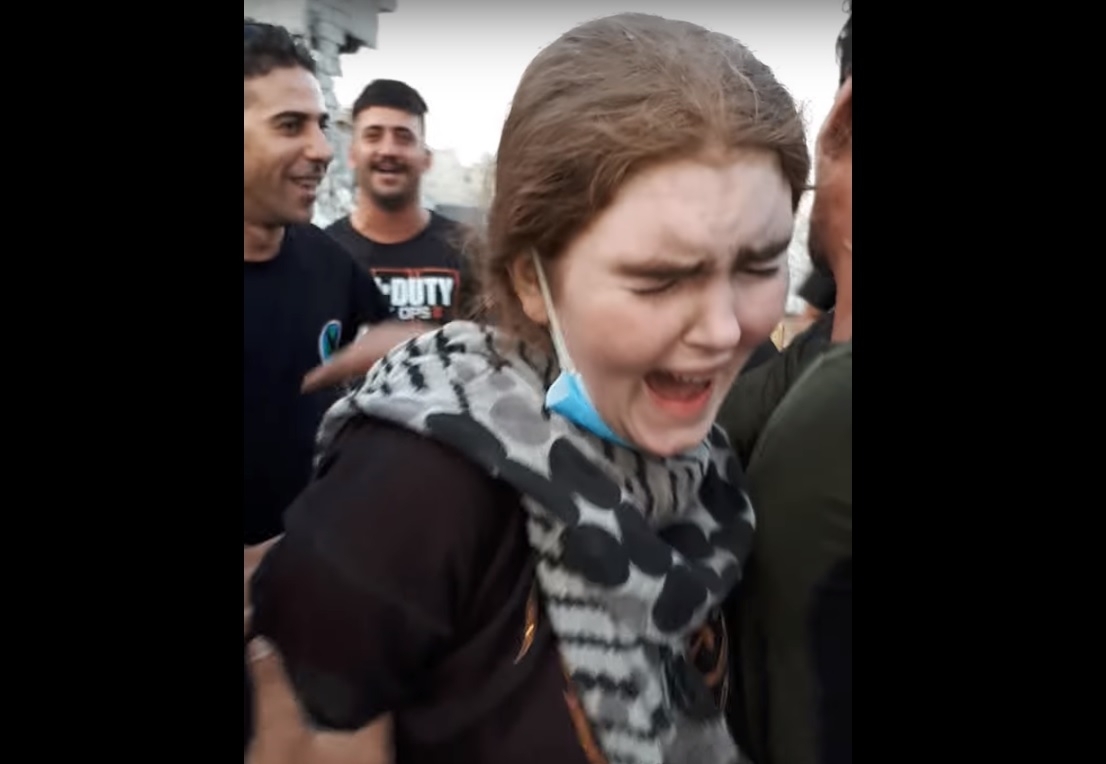
German schoolgirl Linda Wenzel who joined Isis faces execution in Baghdad: 'I ruined my life'


Her parents are desperate for her to be tried in Germany.

Linda Wenzel being captured by Iraqi soldiers in Mosul. They accused the 16-year-old German schoolgirl of being an Isis sniper

A schoolgirl who fled Germany with an Isis soldier when she was 15 years old could be executed in Baghdad after being captured in Mosul earlier this year. She has now met with her mother and sister as she languishes in a Baghdad prison.

Pulsnitz teenager Linda Wenzel, now 17 years old, described joining Isis as the decision that "ruined her life". Her role with Isis was to whip and abuse women who were not dressed appropriately, the Daily Mail reported.

She was smuggled into Syria through Istanbul after forging her mother's signature to buy a ticket from Germany.

Her mother, 48-year-old Katharina Wenzel, embraced Linda after a moment of awkward hesitation. "I do not know how I came up with the stupid idea to go to the Islamic State," Linda said to her mother. "I have ruined my life."

Linda was dressed in black clothing and wearing a head scarf. Her mother greeted her with a small Christmas-themed toy.

According to metro.co.uk, Linda's father Reiner Wenzel was greatly concerned his daughter would be executed. "I want so much that my Linda comes home again healthy. I will always be there for her. I fear for her. The authorities absolutely have to bring her to Germany so that she can get a fair trial."

If Linda avoids a death sentence, she could still spend the next 10 years in a Baghdad jail. She will front the court in January.

Saudi Arabia has the best military equipment money can buy — but it's still not a threat to Iran

Saudi Arabia has one of the most impressive arsenals in the world, large ambitions, and a very capable rival. What it doesn't have is realistic capability.

Saudi special forces soldiers with G36C assault rifles.  (Saudi Press Agency)

Saudi Arabia has some of the greatest military equipment money can buy, but its military is still not seen as a threat to its longtime rival Iran.Saudi Arabia's military has not proved capable of effectively fighting back Iran-backed Houthi rebels in Yemen.Its arsenal is designed for a large conventional war — not proxy fighting.

In the past few years, Saudi Arabia has led an intervention in Yemen's civil war, been the driving force behind a diplomatic crisis between Qatar and its neighbors, and involved itself in the politics of Lebanon.

All of these things appear to have one common objective: to push back against the influence of Iran.

But experts say Saudi Arabia's ambitions are limited by its military, which is considered an ineffective force even though the kingdom is one of the world's largest spenders on defense.

"The fact is, Iran is better at doing this stuff," said Michael Knights, a Lafer fellow at The Washington Institute who specializes in the military and security affairs of Iraq, Iran, and the Persian Gulf.

"There's nobody in the Iranian General Staff that's afraid of Saudi Arabia on the ground," Knights said.

Saudi Arabia's struggles in Yemen — where its years-long conflict with the Houthi rebels has no end in sight — reveals its shortcomings against an adversary like Iran

"What we are really talking about is how they stack up in a proxy war," Knights said. "It's what they are doing in the region nowadays."

Iranian soldiers marching in a 2011 parade in Tehran to commemorate the anniversary of the Iran-Iraq war.  (Reuters)

One of the largest spenders on defense

Saudi Arabia's military faces two main problems. It is too large, making it more susceptible to organizational and quality issues, and its arsenal is designed for a large conventional war rather than the proxy wars of the 21st century.

For all Saudi Arabia's military ineffectiveness, it's hard to blame the kingdom's equipment. Last year, Saudi Arabia was the fourth-largest spender on defense products in the world, just behind Russia.

According to IHS Jane's, a British publishing company specializing in military, aerospace, and transportation topics, Saudi Arabia was the world's largest importer of weapons in 2014.

Data from the Stockholm International Peace Research Institute shows that Saudi Arabia was the second-largest importer of weapons in both 2015 and 2016. Arms imports into the kingdom have increased by over 200% since 2012, according to the institute.

The weaponry being bought is not low quality, either. The majority of Saudi Arabia's military hardware is bought from US companies. In fact, 13% of all US arms exports in 2016 were headed into the kingdom. Companies from the UK and Spain were the second- and third-largest sellers.

A Royal Saudi Air Force Eurofighter Typhoon.  (Wikimedia commons)

The Royal Saudi Air Force arsenal includes Eurofighter Typhoons, perhaps the most advanced fighter jet fielded by European militaries, and American F-15 Eagles, the undisputed king of the skies for three decades and still formidable. The Saudis even have their own model of the Eagle — the F-15SA (Saudi Advanced), which just started being delivered this year.

The Royal Saudi Land Forces, the Saudi army, have everything from M1A2 Abrams tanks and M2 Bradley Fighting Vehicles to AH-64D Apache Longbow and UH-60 Black Hawk helicopters.

Virtually every vessel in the Royal Saudi Navy was built in American shipyards, specifically for Saudi Arabia. Its newest frigates, the Al Riyadh class, are modified versions of France's La Fayette-class frigate.

Saudi Arabia is one of the best-equipped nations in the world. Yet the Saudi military does not strike fear into the hearts of its adversaries, or would-be foes.

Saudi special forces soldiers.  (Vice/YouTube)

The proxy war in Yemen

Evidence of the Saudi military's shortcomings can be seen just south of the Saudi border in Yemen.

Almost three years after Saudi Arabia, supported by other Gulf and Arab states, launched a military intervention to support Yemen's ousted president, Abdrabbuh Mansur Hadi, Iran-backed Houthi rebels are still active and continue to hold Yemen's largest city and capital, Sana'a.

Additionally, the Houthis have proved capable of launching high-profile attacks against the Saudis. Those include multiple cross-border raids into Saudi Arabia, successful attacks on Emirati and Saudi navy ships, and the launching of ballistic missiles into the heartland of the kingdom.

In a more recent embarrassment, a report from The New York Times suggested that a ballistic missile fired by the Houthis that exploded at an airport in the Saudi capital of Riyadh was actually not shot down as previously claimed by the Saudi military.

The state of the War in Yemen earlier this month. Red represents territory held by the Yemeni government backed by the Saudi-led coalition, white for Al-Qaeda affiliates, black for ISIS, and green for Iran-backed Houthi rebels.  (Wikimedia commons)

Why there has been no victory in Yemen

The Saudis have had a hard task in Yemen. They have to operate in the Houthi heartland against a well-trained, well-funded, and well-supplied fighting force.

Saudi Arabia, however, has not deployed significant land forces into Yemen that would be required to win on the battlefield.

"We don't know if the Saudi military is able to have a significant impact on the Yemen war, because we've only seen the deployment of Saudi airpower," Knights told Business Insider.

"Generally, an airpower-only campaign is not going to have a great impact — particularly in this type of complex terrain with an enemy who is very adept at hiding from airpower and often looks like civilians," he said.

Saudi troops at their base in Yemen's southern port city of Aden in 2015.  (Reuters)

Knights estimates that 10,000 to 20,000 troops would be required to have the desired affect. Yet the Saudi military has not deployed its ground forces — most likely because the Saudi leadership knows that, as Knights says, they "suffer from significant weaknesses."

These weaknesses include a lack of logistical equipment and experience needed to carry out such a campaign.

"They have no experience in an expeditionary operation," he said, noting that the Desert Storm campaign against Iraq — which Saudi Arabia did contribute to — was largely an American effort.

Additionally, Saudi ground forces as a whole are not trained well enough to where they would be able to perform successfully in large-scale operations. As such, a Saudi ground force in Yemen may cause more harm than good.

Bilal Saab, the senior fellow and director of the Defense and Security Program at the Middle East Institute, told Business Insider that Saudi Arabia understood the potential harm of its ground forces. In an email, Saab said Saudi Arabia would not deploy large contingents of ground forces "because their casualties would be severe and they most probably would cause tremendous collateral damage in Yemen."

Saudi artillery firing toward Houthi positions from the Saudi border with Yemen in 2015.  (Reuters)

What can be done

In Knights' view, Saudi Arabia needs to downsize its military, focus on quality recruitment and training, and make units that are capable of fighting alongside and training local allies.

Today, local militias and tribal groups form the majority of the ground force battling the Houthis, and few if any Saudi soldiers assist them — save for a few special forces units.

"As a result," Knights says, "there is no credible military pressure on the Houthis."

The proxy battle in Yemen is just one example of Iran's growing influence across the Middle East. Hezbollah, for instance, is better armed and organized than Lebanon’s official military. Hamas, engaged in ongoing conflict with Israel, is also publicly backed by Iran and a number of militias in Iraq's Popular Mobilization Units receive training, funding, and equipment from their neighboring country.

Saudi Arabia's arsenal, though impressive, also needs to be built up with its desired applications in mind. For now, those seem to be proxy wars against an enemy that is rarely in uniform, as opposed to one fought against a conventional army from the Cold War era.

See all
Saudi Arabia has the best military equipment money can buy — but it's still not a threat to Iran

pulse.ng

Dec 16, 2017 1:00 PM

Saudi Arabia has one of the most impressive arsenals in the world, large ambitions, and a very capable rival. What it doesn't have is realistic capability.

Saudi special forces soldiers with G36C assault rifles.  (Saudi Press Agency)

Saudi Arabia has some of the greatest military equipment money can buy, but its military is still not seen as a threat to its longtime rival Iran.Saudi Arabia's military has not proved capable of effectively fighting back Iran-backed Houthi rebels in Yemen.Its arsenal is designed for a large conventional war — not proxy fighting.

In the past few years, Saudi Arabia has led an intervention in Yemen's civil war, been the driving force behind a diplomatic crisis between Qatar and its neighbors, and involved itself in the politics of Lebanon.

All of these things appear to have one common objective: to push back against the influence of Iran.

But experts say Saudi Arabia's ambitions are limited by its military, which is considered an ineffective force even though the kingdom is one of the world's largest spenders on defense.

"The fact is, Iran is better at doing this stuff," said Michael Knights, a Lafer fellow at The Washington Institute who specializes in the military and security affairs of Iraq, Iran, and the Persian Gulf.

"There's nobody in the Iranian General Staff that's afraid of Saudi Arabia on the ground," Knights said.

Saudi Arabia's struggles in Yemen — where its years-long conflict with the Houthi rebels has no end in sight — reveals its shortcomings against an adversary like Iran

"What we are really talking about is how they stack up in a proxy war," Knights said. "It's what they are doing in the region nowadays."

Iranian soldiers marching in a 2011 parade in Tehran to commemorate the anniversary of the Iran-Iraq war.  (Reuters)

One of the largest spenders on defense

Saudi Arabia's military faces two main problems. It is too large, making it more susceptible to organizational and quality issues, and its arsenal is designed for a large conventional war rather than the proxy wars of the 21st century.

For all Saudi Arabia's military ineffectiveness, it's hard to blame the kingdom's equipment. Last year, Saudi Arabia was the fourth-largest spender on defense products in the world, just behind Russia.

According to IHS Jane's, a British publishing company specializing in military, aerospace, and transportation topics, Saudi Arabia was the world's largest importer of weapons in 2014.

Data from the Stockholm International Peace Research Institute shows that Saudi Arabia was the second-largest importer of weapons in both 2015 and 2016. Arms imports into the kingdom have increased by over 200% since 2012, according to the institute.

The weaponry being bought is not low quality, either. The majority of Saudi Arabia's military hardware is bought from US companies. In fact, 13% of all US arms exports in 2016 were headed into the kingdom. Companies from the UK and Spain were the second- and third-largest sellers.

A Royal Saudi Air Force Eurofighter Typhoon.  (Wikimedia commons)

The Royal Saudi Air Force arsenal includes Eurofighter Typhoons, perhaps the most advanced fighter jet fielded by European militaries, and American F-15 Eagles, the undisputed king of the skies for three decades and still formidable. The Saudis even have their own model of the Eagle — the F-15SA (Saudi Advanced), which just started being delivered this year.

The Royal Saudi Land Forces, the Saudi army, have everything from M1A2 Abrams tanks and M2 Bradley Fighting Vehicles to AH-64D Apache Longbow and UH-60 Black Hawk helicopters.

Virtually every vessel in the Royal Saudi Navy was built in American shipyards, specifically for Saudi Arabia. Its newest frigates, the Al Riyadh class, are modified versions of France's La Fayette-class frigate.

Saudi Arabia is one of the best-equipped nations in the world. Yet the Saudi military does not strike fear into the hearts of its adversaries, or would-be foes.

Saudi special forces soldiers.  (Vice/YouTube)

The proxy war in Yemen

Evidence of the Saudi military's shortcomings can be seen just south of the Saudi border in Yemen.

Almost three years after Saudi Arabia, supported by other Gulf and Arab states, launched a military intervention to support Yemen's ousted president, Abdrabbuh Mansur Hadi, Iran-backed Houthi rebels are still active and continue to hold Yemen's largest city and capital, Sana'a.

Additionally, the Houthis have proved capable of launching high-profile attacks against the Saudis. Those include multiple cross-border raids into Saudi Arabia, successful attacks on Emirati and Saudi navy ships, and the launching of ballistic missiles into the heartland of the kingdom.

In a more recent embarrassment, a report from The New York Times suggested that a ballistic missile fired by the Houthis that exploded at an airport in the Saudi capital of Riyadh was actually not shot down as previously claimed by the Saudi military.

The state of the War in Yemen earlier this month. Red represents territory held by the Yemeni government backed by the Saudi-led coalition, white for Al-Qaeda affiliates, black for ISIS, and green for Iran-backed Houthi rebels.  (Wikimedia commons)

Why there has been no victory in Yemen

The Saudis have had a hard task in Yemen. They have to operate in the Houthi heartland against a well-trained, well-funded, and well-supplied fighting force.

Saudi Arabia, however, has not deployed significant land forces into Yemen that would be required to win on the battlefield.

"We don't know if the Saudi military is able to have a significant impact on the Yemen war, because we've only seen the deployment of Saudi airpower," Knights told Business Insider.

"Generally, an airpower-only campaign is not going to have a great impact — particularly in this type of complex terrain with an enemy who is very adept at hiding from airpower and often looks like civilians," he said.

Saudi troops at their base in Yemen's southern port city of Aden in 2015.  (Reuters)

Knights estimates that 10,000 to 20,000 troops would be required to have the desired affect. Yet the Saudi military has not deployed its ground forces — most likely because the Saudi leadership knows that, as Knights says, they "suffer from significant weaknesses."

These weaknesses include a lack of logistical equipment and experience needed to carry out such a campaign.

"They have no experience in an expeditionary operation," he said, noting that the Desert Storm campaign against Iraq — which Saudi Arabia did contribute to — was largely an American effort.

Additionally, Saudi ground forces as a whole are not trained well enough to where they would be able to perform successfully in large-scale operations. As such, a Saudi ground force in Yemen may cause more harm than good.

Bilal Saab, the senior fellow and director of the Defense and Security Program at the Middle East Institute, told Business Insider that Saudi Arabia understood the potential harm of its ground forces. In an email, Saab said Saudi Arabia would not deploy large contingents of ground forces "because their casualties would be severe and they most probably would cause tremendous collateral damage in Yemen."

Saudi artillery firing toward Houthi positions from the Saudi border with Yemen in 2015.  (Reuters)

What can be done

In Knights' view, Saudi Arabia needs to downsize its military, focus on quality recruitment and training, and make units that are capable of fighting alongside and training local allies.

Today, local militias and tribal groups form the majority of the ground force battling the Houthis, and few if any Saudi soldiers assist them — save for a few special forces units.

"As a result," Knights says, "there is no credible military pressure on the Houthis."

The proxy battle in Yemen is just one example of Iran's growing influence across the Middle East. Hezbollah, for instance, is better armed and organized than Lebanon’s official military. Hamas, engaged in ongoing conflict with Israel, is also publicly backed by Iran and a number of militias in Iraq's Popular Mobilization Units receive training, funding, and equipment from their neighboring country.

Saudi Arabia's arsenal, though impressive, also needs to be built up with its desired applications in mind. For now, those seem to be proxy wars against an enemy that is rarely in uniform, as opposed to one fought against a conventional army from the Cold War era.

PHOTO Of Osinbajo's Wife, Kneeling Down To Greet Gowon Everyone Is Talking About

Wife of the Vice President, Dolapo Osinbajo, was down of her kneels on Thursday to greet former Head of State, General Yakubu Gowon, rtd, at the Aso Rock Christmas Carol held yesterday night.

The photo is currently trending on social media as people acknowledged her traditional knowledge and respect for elder despite carrying the position of a first lady.


The terrorist attacks that shocked the world this year

In 2017, terrorists went on a rampage, striking here, there and everywhere.

Scene like this is has become a daily occurrence in Nigeria.  (Foreign Policy)

The capacity of terrorists to inflict maximum damage became quite a thing all through 2017.

France, the United States, Nigeria, the Middle East and the UK all had their fair share of gun and bomb attacks; as governments around the world continue to grapple with the evil that has become terrorism.

Terrorists did deploy trucks, bombs, guns and knives as they killed innocents and attacked everywhere all year.

2017 was a pretty bloody and violent one.

1. Boko Haram attacks Nigeria

A bomb blast scene in Maiduguri  (Tribune)


Terrorist sect Boko Haram continued to mount soft target attacks on civilian populations all through 2017.

In July, Boko Haram attacked ten trucks conveying military personnel and oil workers at Magumeri, Gubio local government area of Borno State.

Local reports say only five persons escaped this attack.

In May, seven people were killed when Boko Haram fighters stormed remote villages in Mussa and shot at villagers in Askira-Uba LGA, Borno state. An unspecified number of people were also reportedly kidnapped.

In June, multiple attacks rocked the eastern axis of Maiduguri. At least 10 persons didn’t survive the barrage of explosives and gunfire.

Through June and December, Boko Haram killed in Borno, Yobe and Adamawa.

2. New York truck attack

The suspect in the New York truck attack used to drive for Uber  (REUTERS/Andrew Kelly)


On October 31, 2017, a terrorist rammed a rented truck into cyclists and runners along the Hudson River's bike path, killing eight and injuring 11 others.

The attacker was later found to have links with terrorist sect ISIS.

3. Manchester Terror attack

Scene of Manchester attack  (AFP)


On May 22, 2017, at least 22 people were killed and 59 others left seriously injured when a terrorist detonated an explosive device at a Manchester Arena filled with concert goers.

Teenage US singer, Ariane Grande, had just finished headlining a concert at the Arena when the explosive went off.

4. Paris Shooting

Shooting in Paris  (AFP)


On April 20, 2017, a lone gunman killed a police officer on the Champs Elysees in Paris.

The attacker was shot dead at the scene before he could inflict more damage.

ISIS claimed responsibility for the killing.

5. Stockholm attack

Police at scene of Stockholm killing  (AFP/File)


In April, four people were killed and at least 15 injured when a terrorist drove a truck down a busy shopping street in Stockholm, Sweden.

39-year-old Rakhmat Akilov, a failed asylum seeker from Uzbekistan, confessed to the crime.

Akilov confessed to being a member of ISIS and told police investigators that he had “achieved what he set out to do”.

6. Westminster attack

British police grapple with ISIS terrorism  (REUTERS/Hannah McKay)


On March 22, 2017, Khalid Masood mowed down pedestrians on Westminster bridge, London, killing four people and injuring many others.

The Express UK reported that “The knifeman crashed his car into the railings outside parliament, got out and ran into New Palace Yard where he stabbed a brave police officer to death.

“Masood was shot dead by armed police”.

7. Louvre, France attack

Louvre in France came under attack as well  (AFP)


A terrorist wielding a knife was shot dead after he tried to attack soldiers guarding the Louvre in Paris, France on February 3, 2017. 

The attacker chanted ‘Allahu Akbar’ and drew a machete on the soldiers after being told he could not gain access to the Louvre Carousel shopping centre.

He was carrying two backpacks on him.

8. Finsbury Park terror attack

Finsbury attack came under attack too  (AFP)


On June 19, 2017, a van driver mowed down Muslim worshippers on Seven Sisters road which lies a few meters away from the Finsbury Park mosque in London.

One man died from the attack while 10 others were left badly injured.

9. London bridge terror attack

London bridge terror attack  (AFP)


On June 3, 2017, three men wielding knives mowed down pedestrians on the London bridge and embarked on a killing spree in pubs and restaurants around 10pm.

10. US mass shootings

Candle lights for the departed  (AFP/File)


According to Business Insider, there were over 307 mass shootings in the United States in 2017.

In November, at least 26 people were killed and several others left injured when a man approached the First Baptist Church in Sutherland Springs, Texas, and opened fire on the congregation.

A Business Insider report reads as follows: “The Texas incident marked the 307th mass shooting in 2017, according to the nonprofit Gun Violence Archive, which tracks shootings in the US. The US has had nearly as many mass shootings as days in 2017.

“Americans are more likely to die from gun violence than many leading causes of death combined, with some 11,000 people in the US killed in firearm assaults each year”.

On October 1, 2017, a gunman opened fire on a crowd of concert goers at the Route 51 Harvest Music festival on the Las Vegas strip in Nevada, killing 58 and injuring 548 others.

11. New York subway explosion

New York subway came under attack from an ISIS lover  (AP Photo/Andres Kudacki)


27-year-old Akayed Ullah blew up a homemade explosive in a pedestrian subway tunnel in Midtown, Manhattan on December 11, 2017.

The blast was detonated in an underground walkway linking two subway lines beneath the Port Authority bus terminal.

The suspect was identified as a Bangladeshi national who has taken permanent residence in the US since 2011 on an F43 family immigrant visa.

A law enforcement official with direct knowledge of the investigation told CNN that the suspect had pledged allegiance to ISIS.

The suspect also said he acted in response to Israeli actions in Gaza.

No lives were lost in this attack, but five persons were treated for minor injuries.


Residents Of Borno Community Remain Shocked After Boko Haram Killed 6 Soldiers, Carted Away 2 Gun Trucks

The residents of Mainok village, 59 kilometers from Maiduguri, capital of Borno State, are still in shock following Wednesday’s killing of six soldiers by Boko Haram insurgents, who also carted away two Nigerian Army gun trucks.

The insurgents stormed Mainok attacked military base at a time all the soldiers had allegedly gone out. The attack, according to the villagers, lasted one hour. A resident, Bukar Kundiri, told SaharaReporters that they still feel unsafe. Their sense of panic is on account of the ease with which the insurgents carried out the attack and went away with weapons.

"We are preparing to take families to Maiduguri. We are not safe. If they could go away with military vehicles unhindered, anything can happen. If they want us to stay, there is much that needs to be done. We can't afford to lose our family members after what Boko Haram did to us three years ago,” said a resident.

A member of the Civilian Joint Task Force (CJTF) disclosed that Boko Haram members were regularly sighted on farmlands. These sightings, he said, were reported to Army authorities, who did nothing. He explained that they foresaw Wednesday’s attack, which he said proved that area is massively unsafe. He added that when the insurgents arrived on Wednesday, they assured villagers of their safety, saying they were only after soldiers.

"There was confusion everywhere on Wednesday but they told us not to worry. They said they came for soldiers, not villagers. But we could not trust them; they killed soldiers and wounded four others," Kundiri told SaharaReporters.

An impeccable security source told SaharaReporters that six soldiers were killed and nine others seriously wounded, with the insurgents going away with plenty of ammunition and two gun trucks. The source disclosed that the corpses of the soldiers were received at the military hospital.

Army troops claimed that they killed many terrorists and injured many, but their colleagues went away with their corpses and the injured, a claim that disappointed many residents.

The Borno State Police Command, in a statement, said the attack was repelled by combined forces of military and SARS personnel. 

“Two civilians (one Baba Kachalla and another identity not yet known) sustained gunshot wounds and are responding to treatment at University of Maiduguri Teaching Hospital," said the statement.

However, a resident told SaharaReporters that the police lied.

"I was sad when Mr. Damien Chukwu, the Borno State Police Command spokesman, said only two civilians were injured. I don't really understand why they would lie about this."

Destroyed home by Boko Haram in Borno State

UK Demands Implementation Of Reports On Buhari Govt Massacre of 1000 Shia Muslims In Nigeria

The United Kingdom has demanded that the Nigerian Government implements the reports of the various commissions set up to probe the killing of no fewer than 350 members of the Shia sect in Zaria, Kaduna State.

According to information made available by the commission set up by the Kaduna State Government under the leadership of Governor Nasir el-Rufai, over 1,300 persons died during a face-off between the Nigerian Army and the Shia sect members in December 2015.

Members of the sect, led by Sheikh Ibrahim el-Zakzaky, under the umbrella of the Islamic Movement in Nigeria, had prevented the convoy of the Chief of Army Staff, Lieutenant General Tukur Buratai, from passing through the road in front of the sect’s headquarters in Zaria.

Stating the position of the United Kingdom was its High Commissioner in Nigeria, Paul Arkwright, on his Twitter handle on Thursday.

Arkwright said it was time the reports of the incident is implemented.

Both the Federal and Kaduna State Governments set up panels to probe the incident.
Arkwright tweeted: “It is two years since the #Zaria incident when some 350 Nigerians were killed by the military.

“Since then there have been several investigations, reports and recommendations.

“But a number of recommendations remain to be implemented.
“We call for accountability on all sides.”

Soldiers Capture 167 Insurgents, Recover Weapons/Explosives (Photos)


@POLITICSNGR
PoliticsNGR has been furnished with a statement from the Nigerian Army detailing the capture of 167 insurgents in the Lake Chad Islands.
Read the full statement below;
"Troops of Operation Lafiya Dole have intensified the ongoing offensive on Boko Haram enclaves in the Islands around the Lake Chad region. The offensive which commenced about two weeks ago with coordinated air and artillery bombardments on Boko Haram enclaves while ground troops moved in to clear the areas, is yielding positive results, as several insurgents have been killed and 167 insurgents who were fleeing from the offensive have been captured by troops.
Troops also extricated and profiled 67 women and 173 children who revealed during profiling exercise that they are family members of insurgents who fled, following troops' offensive. Arrangement is ongoing to hand them over to IDP camp authorities after preliminary investigations are concluded.
Meanwhile in the past two months, troops of Operation Lafiya Dole have sustained ongoing precursor operations and have conducted long range fighting patrols and ambushes seeking out and clearing BHT hideouts in Saada and Juwei in the fringes of northern Borno. During the operations troops intercepted and arrested 53 fleeing insurgents who have been profiled and are currently helping with investigations. Fifteen insurgents have also willingly abandoned the insurgent group, describing it as a futile struggle and have surrendered to troops of Operation Lafiya Dole within the period.
Our heartfelt sympathy and condolences go to families and relations of troops as well as civilians who paid the supreme price in the encounters and callous suicide bomb and Improvised Explosive Device (IED) attacks by the terrorists.
While troops continue relentlessly in the ongoing offensive to decisively rid the northeast hinterlands of insurgents, members of the public are implored to be more security conscious and vigilant in their homes, communities, places of worship , markets and other places of business to identify strange persons as well as any suspicious activity and promptly report same to security agencies. They are also urged to remember to “Say something, if you see something”.
Boko kill them terrorist jawe
Muslims are imbecilic hypocrites. Why the use of cell phones, AK-47 and even vehicles when you are Boko haram?
12 Likes
but i cant finds any weapon on them
2 Likes
why do they need solar panels?
1 Like
Jibril659:
why do they need solar panels?

to charge their brains
18 Likes 1 Share
Yeligray:
to charge their brains

ctrl+delete
Why are they still keeping them?
These Terrorists sef!
Fighting useless and meaningless war is just programmed into their brain thru religion.
The North will never recover from this self destructive mode it programmed itself, never!
6 Likes
Duru1:
Muslims are imbecilic hypocrites. Why the use of cell phones, AK-47 and even vehicles when you are Boko haram?

You are deluded by saying moslems.
1 Like
Looks like the military is just rounding up anybody
8 Likes
That is very good
You are deluded by saying moslems.

Please are Christians also Boko Haram? Talk about delusion, you won its medal.
11 Likes
Hahahaha. The $1billion is working. APC should be a good story line for nollywood movies.
I can never believe or accredit this government.
Looking at those pictures, you'll notice that these are IDPs being shown as boko haram terrorists. Those items have been posted sometimes ago. Bokoharam terrorists can't be fighting with slippers on their feet.
13 Likes 1 Share
lol! they all look malnourished.
our president's kinsmen
1 Like
These men are really doing a great job over there in the Northern Insurgency zones.
God Bless, Keep and Protect Our Soldiers!
1 Share
Mass arrest
1bn$ must drop
6 Likes
Our 1billion dollars is now working right? Unto d next story pls
3 Likes
These people are gypsies, not terrorists.
1 Like
So Qur'an, solar panels is part of their weapons nawa o nothing we won't see in this my country
...and you think an educated and upright Christian would have typed this?
Duru1:
Muslims are imbecilic hypocrites. Why the use of cell phones, AK-47 and even vehicles when you are Boko haram?

2 Likes
Hmmmmmmm
Good news
A child that swore never to allow his mother sleep should be ready for the compulsory general vigil .
Are these people Nigerians?
RIP
Duru1:
Muslims are imbecilic hypocrites. Why the use of cell phones, AK-47 and even vehicles when you are Boko haram?

atleast u ar up to 18 year.
News to keep social media active into the new year
Tithe
P'square
Hijab
$1 billion
Boko haram
Fayose
1 Like
Quick question...when the British conquered your lands, your forefathers did not tell you they had Bibles?
danvon:
So Qur'an, solar panels is part of their weapons nawa o nothing we won't see in this my country

1 Like
I could not find the weapons recovered. Hope they are not innocent
No single weapon
Swisscoinng:
Quick question...when the British conquered your lands, your forefathers did not tell you they had Bibles?

My lands or our lands, I wasn't told they had Bibles it was the missionaries that had Bibles
Download the app for Android Phones  Sections:

"I earn more than your Father"


Talks about woju singer Kiss Daniel and the saga with his former employer’s G worldwide is no longer new to us, as damning revelations showed that the former was being paid the sum of thirty thousand naira monthly until his contract was revisited and he started getting up to 40 percent of the finances he was raking in.

His former record label, G-Worldwide of course, fired back, and claimed they have paid over N120 million to the singer so far. 

Now trouble started when a twitter user quizzed former label mate Sugarboy on his current salary structure and the ‘hola hola’ singer fired back saying he earns more than the father of the twitter user .

See below;


"I earn more than your Father"


Talks about woju singer Kiss Daniel and the saga with his former employer’s G worldwide is no longer new to us, as damning revelations showed that the former was being paid the sum of thirty thousand naira monthly until his contract was revisited and he started getting up to 40 percent of the finances he was raking in.

His former record label, G-Worldwide of course, fired back, and claimed they have paid over N120 million to the singer so far. 

Now trouble started when a twitter user quizzed former label mate Sugarboy on his current salary structure and the ‘hola hola’ singer fired back saying he earns more than the father of the twitter user .

See below;